Industrial Safety Fence Guide
When choosing an industrial safety fence system, consider not only appearance or price, but also equipment type, site layout, access requirements, maintenance needs, and future expansion plans.
View Industrial Safety Fence System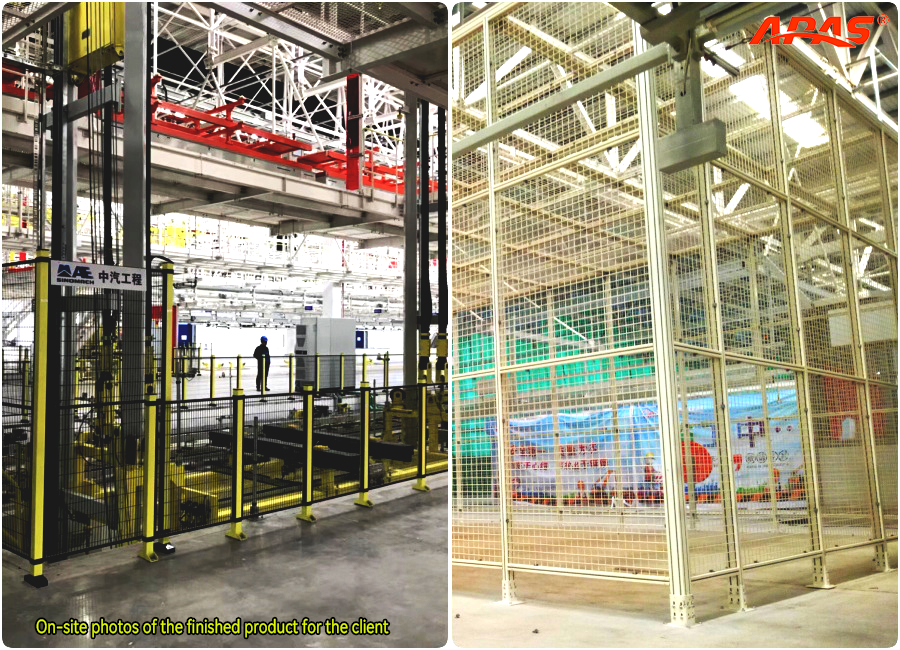
Here are the key points to consider when selecting a suitable industrial safety fence system for your factory or automated equipment area.
First, identify what type of equipment or area the safety fence is intended to protect, such as industrial robots, automated production lines, welding stations, conveyor lines, warehouse sorting systems, AGV operating areas, or hazardous machining zones.
Different equipment types require different fencing considerations:
Before planning the layout, it is recommended to measure the equipment footprint, motion range, maintenance space, and operator positions, then determine the fence installation boundary to avoid insufficient safety distance or poor maintenance access later.
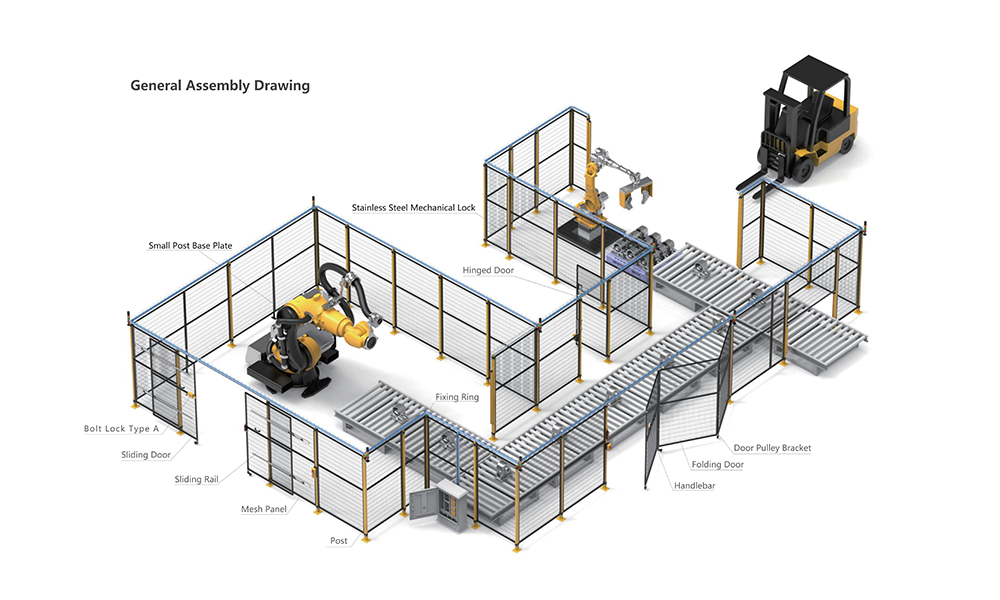
A safety fence system is not simply about enclosing an area. It also needs properly planned access points for daily operation and maintenance.
Common access door types include:
If personnel are not allowed to enter while the equipment is running, it is recommended to equip the access doors with safety locks, interlock switches, or emergency stop devices. When the door is opened, the equipment can stop automatically or enter a safe state.
The fencing layout should match the actual production process instead of simply forming a closed shape around the equipment.
Key factors to consider include:
A reasonable layout should achieve two goals: preventing personnel from accidentally entering hazardous areas and avoiding unnecessary interference with normal production efficiency.
Share your equipment size, access requirements, and factory layout. APAS can help recommend a suitable modular industrial safety fence solution.
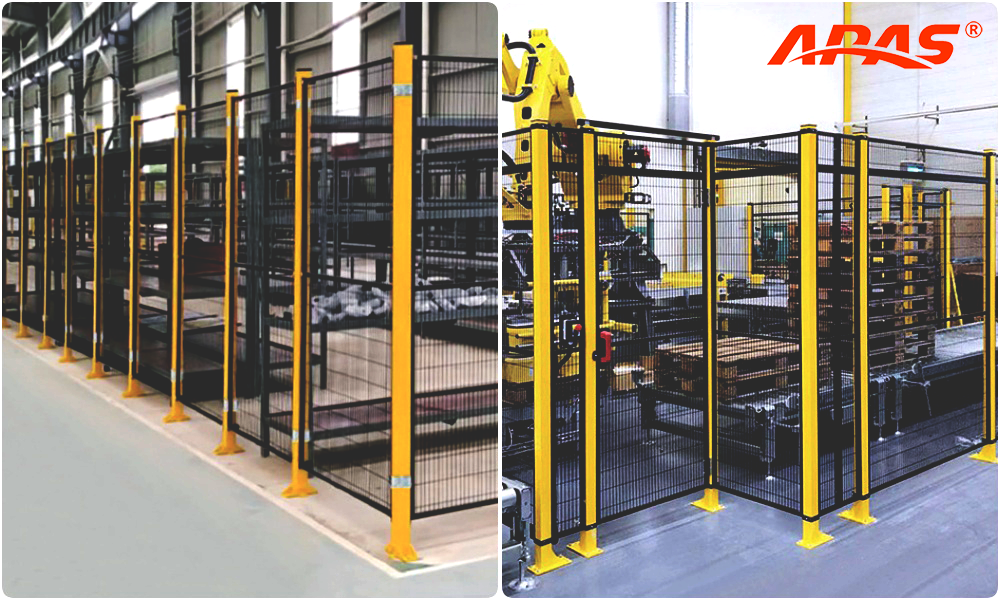
Fence height, mesh opening, and material strength should be selected according to the risk level and working environment.
Mesh size is also important. If the mesh opening is too large, people may be able to reach into hazardous areas. If it is too small, visibility and ventilation may be affected. The final choice should balance safety distance, access risk, and observation needs.
| Application Area | Recommended Fence Type | Access Design | Key Safety Considerations |
|---|---|---|---|
| Robotic workstation | High-strength mesh safety fence | Interlock swing door or sliding door | Robot arm radius, tooling movement, safety distance, emergency stop integration |
| Conveyor or assembly line | Modular mesh fence with open material flow points | Single doors, maintenance doors, or removable panels | Material infeed/outfeed, operator routes, maintenance access |
| Welding or cutting cell | Mesh fence plus solid or shielding panels | Safety interlock door | Spark protection, splash prevention, visibility, ventilation |
| AGV or forklift area | Area separation fence or protective barrier system | Wide access gates or controlled entry points | Aisle width, turning radius, pedestrian separation, warning signs |
| Maintenance platform or equipment frame | Fence combined with stairway, platform, or guardrail system | Service doors or inspection openings | Safe access, fall protection, structural connection, maintenance convenience |
The core purpose of an industrial safety fence is to isolate hazards, so the fence should not be installed too close to moving machine parts.
When planning the fence position, reserve enough safety distance based on the equipment’s maximum motion range, stopping time, possible human access methods, and applicable safety standards.
For high-risk equipment, the following safety devices can be integrated:
This creates a comprehensive safety system combining physical isolation, electrical interlocking, and warning signals instead of relying only on the fence itself.
Production line layouts often change due to process updates, equipment upgrades, or capacity expansion. Therefore, the fence system should also be easy to disassemble, relocate, and expand.
A modular industrial safety fence system is recommended. It usually consists of posts, mesh panels, connectors, door assemblies, and safety accessories. If doors need to be added, fence lengths adjusted, or layouts changed later, modular systems make modification easier and help reduce reconstruction costs.
Fence installation should consider not only the fence itself, but also the floor condition, equipment foundation, and surrounding structures.
Before installation, confirm the following:
For complex sites, on-site measurement or 3D layout confirmation is recommended before installation to avoid major modifications after delivery.
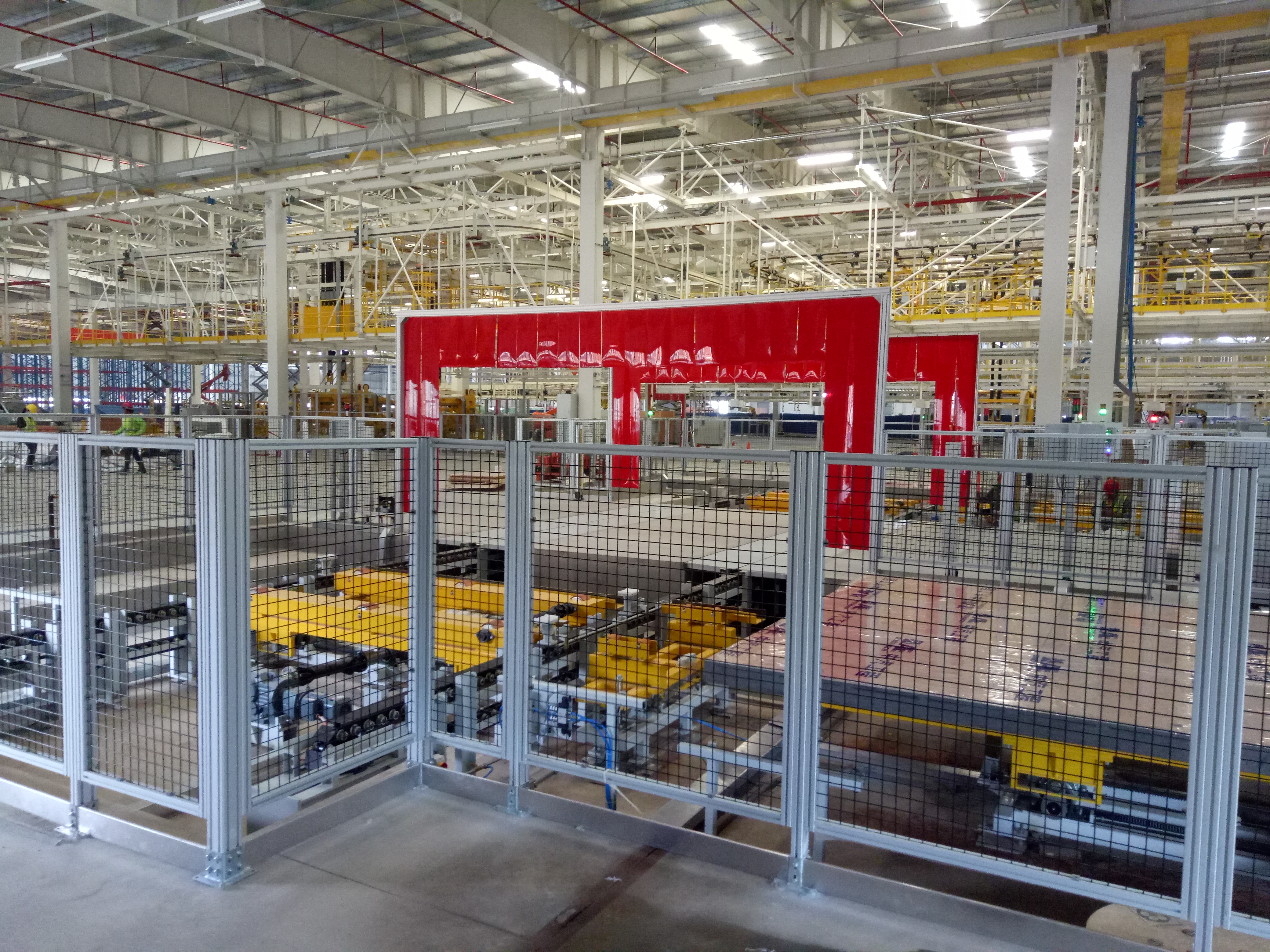
A good industrial safety fence should not only be safe, but also easy to install and maintain.
During selection, pay attention to these details:
For equipment areas requiring frequent maintenance, consider adding inspection doors or removable panels at key positions to avoid large-scale fence disassembly each time maintenance is needed.
The right industrial safety fence system should match your equipment type, production workflow, access requirements, safety distance, and future expansion needs. A well-planned fence layout improves both workplace safety and daily production efficiency.
Explore modular safety fencing solutions for machine guarding, robotic cells, conveyors, and factory area separation.
View Products Contact Us

